
April - May
Shoulder season. The seas have settled, the hills are still green from the rain, and the boats have not arrived yet.

April to October is the settled season. November to March is greener, quieter and the best stretch for mantas. What you are optimising for decides which one is yours.
Plan your journeyThe park is open all year. The dry season buys calm water and reliable landings; the wet season buys green hills, fewer boats and the strongest manta activity. Neither is a compromise, they are different trips.
Sea state
Landscape
Visibility
Manta activity
Other boats
Rates
This compares seasons, not operators. Conditions in any given week are set by the weather that week, and the crew reroutes around it either way.
Month by month
Four windows, each with a reason someone chooses it.
Shoulder season. The seas have settled, the hills are still green from the rain, and the boats have not arrived yet.
Prime dry season and the most reliable dragon-watching. Also the busiest, so book the window early.
Still settled, noticeably quieter than midsummer, and often the best value inside the dry season.
Wet season. Green hills, the fewest boats on the water, and the strongest manta activity of the year.

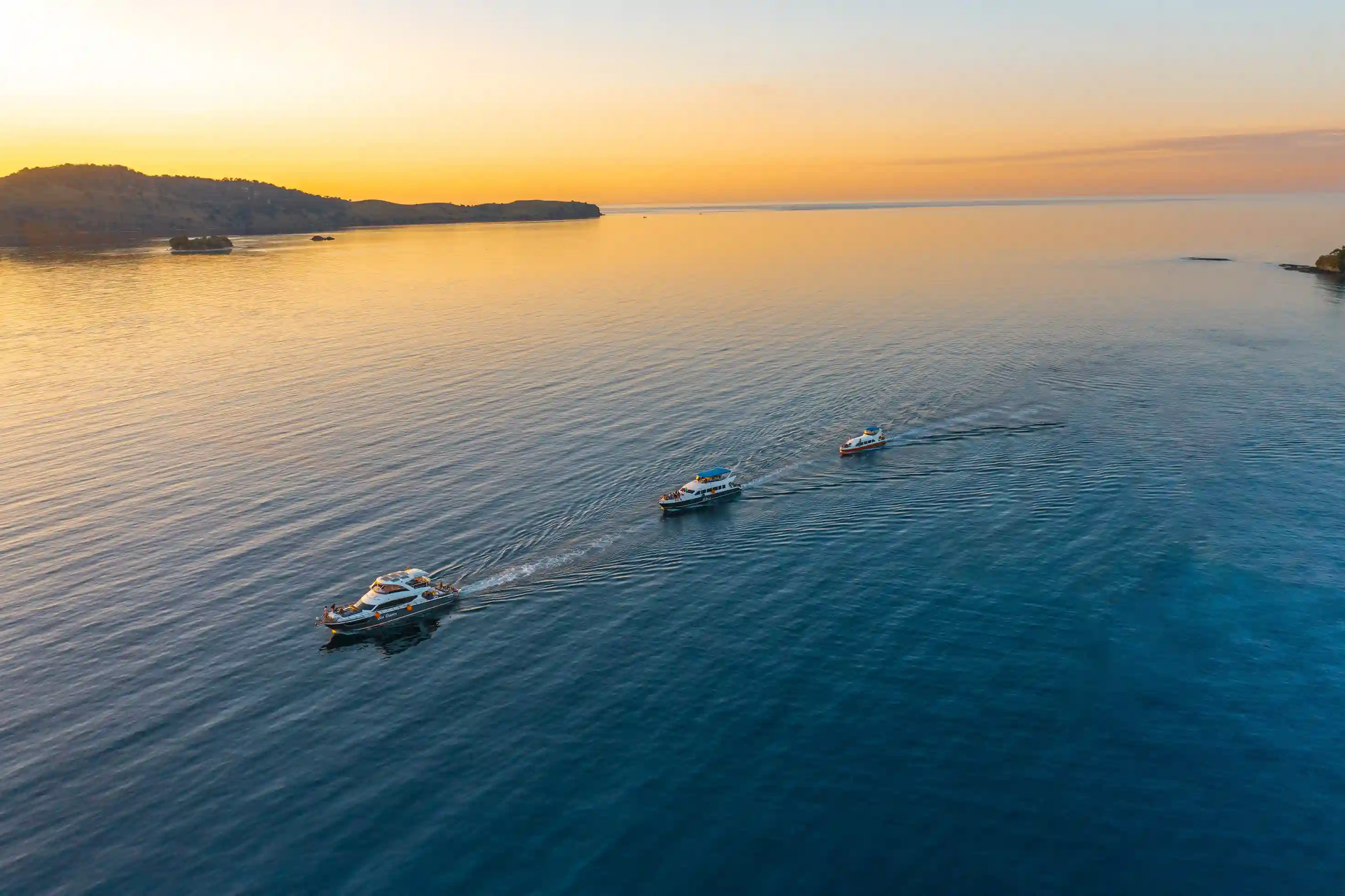
The famous landings — Padar at sunrise, Pink Beach at midday — have a rush hour. It is roughly the same two hours on every boat in the park.
A liveaboard can simply be somewhere else during them. The advantage of sleeping aboard is arriving before the day boats have left Labuan Bajo, and staying after they have gone back.
In the peak weeks of July and August that is the single biggest difference between a good week and a crowded one.



Tell us what matters most — mantas, quiet water, green hills or value — and we will tell you the window that fits.